My Little Pony: Magic Princess
- 3.8
- Rating
- 100.00M
- Installs
- Free
- Price

 Analysis by App-foxy
My Little Pony: Magic Princess is the kind of casual game I open when I want something gentle, colorful, and easy to understand rather than a demanding challenge. I spend my time helping rebuild Ponyville, welcoming familiar ponies, completing small tasks, and gradually turning a damaged town into a livelier place. My overall impression is positive but qualified: it works best as a relaxed collection-and-building game for fans of the series, while players looking for deep strategy or fast action will probably find it too slow.
What makes the game appealing is its clear sense of progress. Even a short session can feel useful because there is usually another building to restore, character task to complete, or piece of the town to improve. I do not need a long explanation before playing, and the bright presentation makes the experience approachable for younger players. At the same time, the gentle pace means patience matters. This is a game about returning regularly and making gradual progress, not rushing through a campaign in one sitting.
Rebuilding Ponyville one small task at a time
I look at Ponyville as a project best enjoyed in small, deliberate visits rather than a checklist to clear as quickly as possible. Before each session, I’d choose one practical goal—such as advancing an objective or keeping resources available—so the town’s many little activities feel connected instead of scattered. That approach makes the gradual rebuilding easier to enjoy, and it leads naturally to the question of which parts of the game make that routine feel worthwhile.
You May Also Like

 AccuWeather: Weather Radar
AccuWeather Review: A Quick, Clear Forecast for Everyday Decisions
For everyday plans, the best forecast is the one you can understand quickly. AccuWeather makes rain timing, radar, and local conditions easy to act on, with a few trade-offs.

 Hill Climb Racing
Why Hill Climb Racing Still Turns Crashes Into One More Run
A tiny car, a bumpy hill and one more upgrade: Hill Climb Racing keeps resurfacing because its simple chaos makes every near-miss feel personal.

 AliExpress - Shopping App
AliExpress Makes Global Shopping Feel Personal, but Shoppers Bear the Risk
AliExpress turns a global marketplace into a pocket-sized discovery engine. Its reach is useful, its shopping loop compelling, and its trade-offs easy to miss.

 Lords Mobile: Kingdom Wars
Lords Mobile Is a Kingdom-Building Routine, Not a Quick Match
A case-by-case verdict on the building, battles, device demands, and social commitments that make Lords Mobile rewarding for some players and exhausting for others.

 PDF Scanner app - TapScanner
TapScanner Makes Paperwork Easier to Capture, Check, and Share
TapScanner makes scanning with a phone feel less like a rescue operation and more like a dependable step in getting work done. Its capture tools are useful, though not flawless.

 Block Blast!
 Shows How Much a Puzzle Game Can Leave Out
A quiet grid game shows why puzzle players increasingly value instant clarity, repeatable skill and low-pressure play—and where the genre still needs to catch up.
More From Our News Desk
View All News


A friendly starting point for casual players
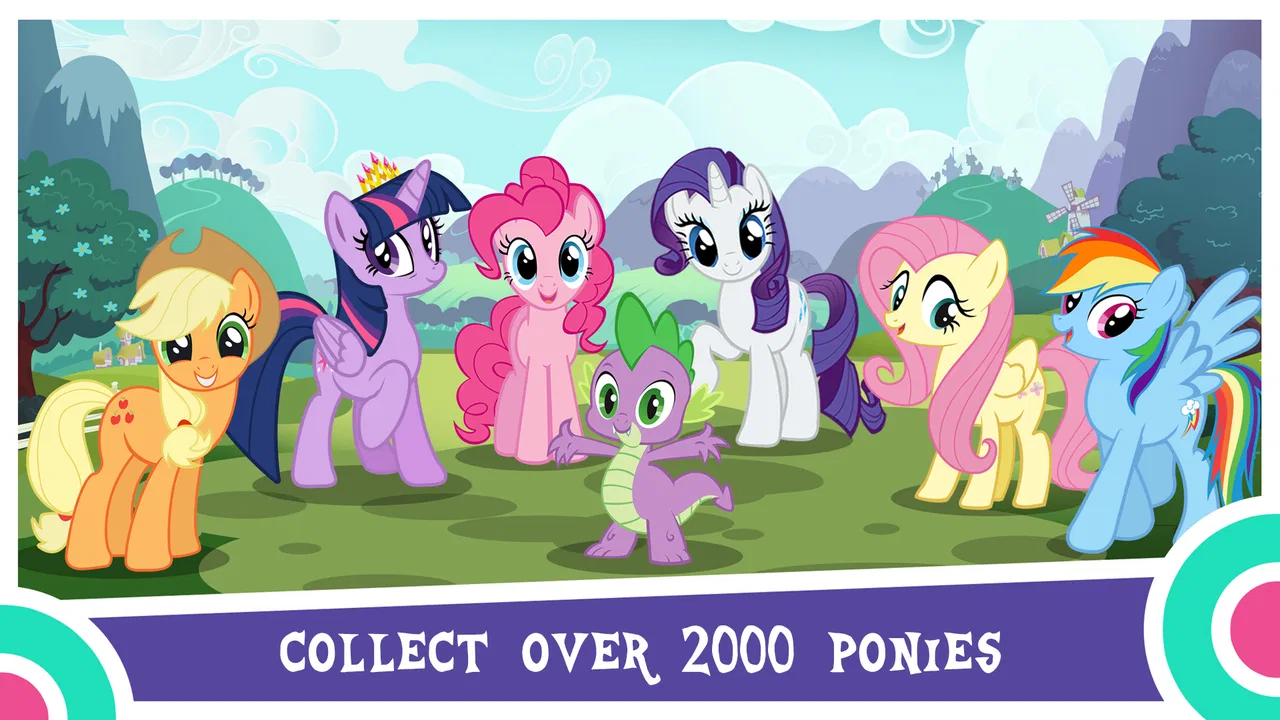
The central idea is easy to grasp: Ponyville needs help, and the world becomes more complete as I work through its activities. Twilight Sparkle, Rainbow Dash, and other ponies give the setting its personality, so the game feels more like an interactive visit to the series than an anonymous town simulator. The familiar cast is important because the individual tasks are generally simple; character recognition and the pleasure of seeing the town develop provide much of the motivation.
I especially like how the game breaks progress into manageable pieces. Instead of asking me to master complicated controls, it presents objectives that fit naturally into a short mobile session. I can check what needs doing, make a few decisions, collect the results, and leave. That makes it suitable for a quick break, a quiet evening, or a child who wants a game that does not demand advanced reflexes.
The casual category is a good fit here. There is no need to memorize elaborate systems before the game becomes enjoyable. The visual language is welcoming, the goals are usually understandable, and the world communicates its purpose through the characters and the town itself. I would recommend starting slowly rather than trying to optimize every move immediately. Early on, learning how the activities connect is more useful than chasing perfect efficiency.
Why the town-building loop holds attention
The strongest part of the experience is the relationship between small actions and visible improvement. A task may not feel dramatic by itself, but several completed activities can make the town feel more active and rewarding. This is a familiar structure in mobile games, yet the My Little Pony setting gives it a softer emotional pull. Restoring a place associated with the characters feels more personal than simply upgrading generic buildings.
There is also a useful rhythm between active play and waiting. I can make progress during a focused session, then return later to continue the next stage. For someone who enjoys checking a game during spare moments, that rhythm is convenient. A realistic everyday use case would be opening it after breakfast, setting up a few objectives, and returning during a commute break or before bed to see what is ready.
That rhythm can also expose the game's main weakness. If I expect constant interaction, the experience may feel limited because progress is designed to unfold gradually. The game rewards regular attention more than intense dedication. I see that as a deliberate trade-off rather than a flaw in every situation, but it is important to understand before downloading it.
Characters give the simple activities more personality
Twilight Sparkle and Rainbow Dash are not just names attached to a generic interface. Their presence helps the game maintain a recognizable identity, and the wider group of ponies makes the town feel like a place worth developing. For fans, this can be enough to turn routine objectives into something pleasant. I found that the character-driven presentation matters most when the underlying activity is repetitive, because the setting gives each return visit a little more warmth.
The game also benefits from being easy to share as a family-friendly experience. Its Everyone content rating makes it approachable for a broad audience, and the controls do not require the coordination expected by action games. I would still encourage parents to pay attention to spending options, especially if a child uses a device with access to purchases. The colorful presentation and collectible motivation can make optional purchases feel tempting even when the game itself is free to start.
Where it differs from other casual mobile games
Compared with a puzzle game, this is less about solving a self-contained challenge and more about maintaining a growing world. A puzzle title may provide a clearer sense of skill improvement, while this game offers a stronger feeling of ownership over Ponyville. Compared with a fast arcade game, it is much calmer and more forgiving, but it also provides less excitement from moment-to-moment play.
It sits closer to a character-based town builder than to a traditional adventure game. That distinction matters because the store summary may suggest a broad pony adventure, but my experience is defined more by gradual management and collection than by constant exploration. If I want a game that can be played with one hand while relaxing, this structure works well. If I want a complete story with a decisive ending, I would choose something else.
Small habits that make progress feel better
One useful habit is to avoid spending every available resource as soon as I receive it. Keeping a reserve gives me more flexibility when a new objective appears or when an upgrade becomes more useful than a decorative choice. I also prefer checking the town before beginning a longer session, because it helps me decide whether I have enough time to complete several activities or should simply collect what is ready.
Another practical approach is to treat the game as a short routine rather than a main daily commitment. I get more enjoyment from a few intentional visits than from repeatedly reopening it without a clear goal. This keeps the slower timers from becoming frustrating and makes each return feel like a small step forward. Players who enjoy completion goals may want to keep track of which characters and areas they are working toward, since the broader town can otherwise feel busy.
I also recommend separating progress decisions from appearance decisions. Improving the town is satisfying, but spending resources only because a decoration looks attractive can leave fewer options for useful development. That trade-off is easy to overlook in a game designed around bright visuals. I found it more rewarding to establish a practical base first and personalize the town after I understood the economy.
The free entry point and the spending question
The game is free, which makes trying it straightforward. Its in-app purchases range from $0.49 to $119.99 per item, so the possible spending scale is much wider than the gentle presentation might suggest. I do not think a player should assume that every purchase is necessary, but I do think the presence of these options changes how the game should be approached.
My advice is to decide in advance whether you are willing to spend anything. If the answer is no, play it as a patient long-term activity and accept that progress may take longer. If you are considering purchases, set a firm limit before the colorful rewards make an immediate shortcut feel attractive. This is particularly relevant for families, where a child may focus on the visible reward rather than the real-world cost.
The important trade-off is convenience versus satisfaction. Paying can make certain parts of the experience feel quicker, but waiting and gradually building the town are also part of what gives the game its identity. I personally prefer the slower route because it makes each improvement feel earned. Players who dislike any form of waiting or optional spending pressure may be happier with a premium casual game that has a single upfront cost.
Performance, access, and who should skip it
My Little Pony: Magic Princess is available for Android devices running version 7.0 or later, and the current version is 11.1.1a. That makes checking device compatibility important before installing, especially on an older phone or tablet. The game has been around since November 8, 2012, and its long presence helps explain why it feels like an established mobile title rather than a brief promotional tie-in.
Gameloft SE is the developer, and the game has reached over 100 million installs with an average rating of 3.9 from around 1.4 million ratings. Those figures suggest a very large audience, but they do not replace personal fit. A popular game can still be wrong for someone who wants constant action, a highly competitive community, or a minimal interface without collection prompts.
I would skip it if I become impatient with timers, repeated objectives, or gradual town development. I would also look elsewhere if my priority is strategic depth. The game offers decisions about how to use resources and how to shape progress, but it does not provide the complexity of a serious management simulator. Likewise, players who are unfamiliar with My Little Pony may not feel the same attachment to the characters that helps carry the simpler tasks.
Who will get the most from it
The best audience is made up of fans of the ponies, younger players who enjoy colorful character worlds, and adults who want a low-pressure game for short sessions. It is also a reasonable choice for someone who likes seeing a location improve over time without needing to master combat or complicated controls. The Everyone rating supports its broad accessibility, while the free entry point makes experimentation easy.
For children, I would frame it as a game about patience and choices rather than as an endless source of instant rewards. Showing them how to save resources, wait for progress, and avoid impulsive purchases can turn the experience into a useful lesson in digital habits. For adults, the main question is whether the familiar setting adds enough charm to make routine tasks enjoyable. In my case, it does, but only when I treat the game as a calm side activity.
Fans who want to revisit the personalities of Twilight Sparkle, Rainbow Dash, and the wider pony cast will find the strongest reason to stay. The game gives those characters a place to live and creates a gradual sense of restoration around them. That emotional connection is more persuasive than the mechanics alone, which are pleasant but not especially demanding.
My final view after spending time in Ponyville
My Little Pony: Magic Princess succeeds because it understands its audience. It is colorful, approachable, and built around the comforting idea of helping a familiar community grow. I enjoy the way small tasks accumulate into visible changes, and I think the character setting gives the town-building loop more personality than a generic casual game would have.
Its limitations are just as clear. The pace can feel slow, the activities may become repetitive, and the range of in-app purchase prices means families should approach the free model thoughtfully. It is not the right recommendation for someone seeking demanding strategy, rapid action, or a game that feels complete after a short burst.
For me, the best way to play is to keep expectations modest: open it for a few minutes, make sensible progress, save resources, and let Ponyville develop over time. The real strength is its relaxed, character-led sense of progress, not mechanical depth. If that sounds appealing, I think it is worth trying, especially for My Little Pony fans. If the setting does not matter to you, a puzzle game or a premium town builder may offer more satisfying gameplay for the same amount of attention.
Overall, I would recommend it as a gentle casual game rather than as a major adventure. It is free to begin, welcoming for an Everyone audience, and substantial enough to support regular short visits. Just remember that its charm comes from patience and familiarity: the more you enjoy the ponies and the gradual rebuilding of their world, the more likely the experience is to work for you.
FAQs for My Little Pony: Magic Princess
01What is My Little Pony: Magic Princess about?
My Little Pony: Magic Princess is a mobile game that allows players to build their own Ponyville, interact with beloved characters from the My Little Pony series, and embark on magical quests. Players can manage resources, complete challenges, and unlock new ponies and locations as they progress in the game.
02Is My Little Pony: Magic Princess free to play?
Yes, My Little Pony: Magic Princess is free to download and play. However, it offers in-app purchases that can enhance gameplay by unlocking additional content, speeding up progress, or acquiring special items. Players can enjoy the game without purchases, but some features may take longer to access.
03What age group is My Little Pony: Magic Princess suitable for?
My Little Pony: Magic Princess is designed for children and fans of the My Little Pony franchise, typically suitable for ages 4 and up. With its colorful graphics and simple gameplay mechanics, it’s appropriate for young players, but parental guidance is recommended for in-app purchases.
04Can I play My Little Pony: Magic Princess offline?
While My Little Pony: Magic Princess requires an internet connection for certain features like updates, social interactions, and in-game events, some aspects of the game can be enjoyed offline. However, for an optimal experience and access to all features, a stable internet connection is recommended.
05How can I ensure my child's safety while playing?
To ensure your child's safety while playing My Little Pony: Magic Princess, enable parental controls on your device to manage in-app purchases and screen time. Discuss online safety with your child, especially if they interact with other players, and monitor their gameplay activities regularly.
Pros
- Colorful graphics enhance the gaming experience.
- Engaging storyline with beloved characters.
- Regular updates keep content fresh.
- Family-friendly with no inappropriate content.
- Intuitive controls suitable for all ages.
Cons
- Requires internet connection to play.
- In-app purchases can become costly.
- Occasional bugs disrupt gameplay.
- Long loading times can be frustrating.
- Some tasks feel repetitive over time.

My Little Pony: Magic Princess
Gallery